
Lands, Resources and Heritage
News
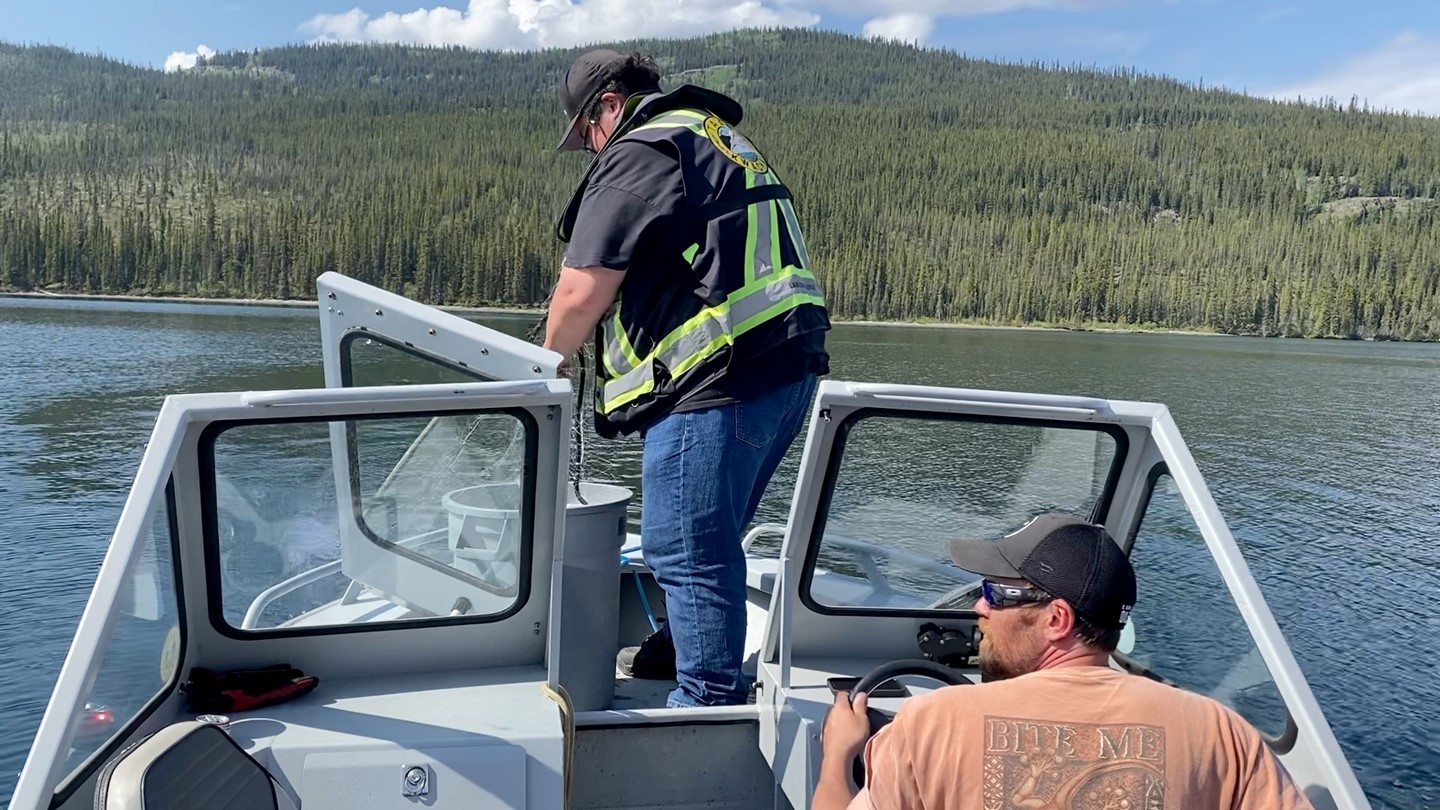
Monitoring for Contaminants Continues
TKC Lands Steward Justin Jacobs and Fish and Wildlife Monitor Jonathan Burdek will continue to support contaminants monitoring in Braeburn Lake, Fox Lake and Lewes Marsh in 2026. Total mercury levels of Lake Trout in the Yukon were found to be generally low; however, the sample size was considered too small to make a lot of conclusions and more sampling is needed to confirm. CLICK HERE FOR MORE INFO
PRESS RELEASE: Lake Trout from Watson Lake have High Levels of DDT
The Northern Contaminants Program has been monitoring contaminants in Lake Trout from Kusawa Lake and Lake Laberge since the early 1990s. More recently we have added an additional lake each year to get an idea of what contaminants are in Lake Trout from other lakes. In 2024, in collaboration with Yukon Environment, we sampled Lake Trout from Watson Lake. We recently received the results of the tissue analysis and found very high levels of DDT in the muscle of these trout. DDT is a pesticide that was widely used in the past and is now banned in Canada. It remains in the environment and can accumulate in fish and other animals. DDT has been identified by international and Canadian health authorities as a contaminant of concern.
The Chief Medical Officer of Health, who is also a member of the local Yukon Contaminants Committee, has been briefed on these data and has advised that an exposure assessment be conducted and coupled with representative fish sampling to make recommendations about fish consumption from Watson Lake. The Yukon Contaminants Committee has also been briefed on these data.
While, as a scientist, it is not my role to provide health advice, it is my role to draw attention to levels of contamination that might be of concern and I can provide the math that I use to determine whether this was the case. The World Health Organization uses a Provisional Tolerable Daily Intake of 0.01 mg/kg body weight/day. For a 70 kg person, for the Watson Lake Lake Trout from 2024, this translates into a maximum recommended intake of 0.41 g/day, or 150 g/year. This is about one meal/year.
DDT is a known contaminant in Watson Lake, since heavy aerial spraying of DDT in the area in the 1950’s and 1960s. A study of the sediments in the lake in 2000 showed that Watson Lake had about 100 times as much DDT as other Yukon lakes. A study of the fish in Watson Lake in 1994 showed DDT concentrations in the muscle of Lake Trout that were three times higher than our findings, so it looks like the levels are decreasing over time.
Our current data is based on only five fish (according to our NCP protocol for ‘extra’ lakes) and these were big, old fish, which would be expected to have higher concentrations of these contaminants than smaller younger fish. We are currently trying to secure funding to analyze an additional 15 lake trout that were sampled in 2024 to get a better idea of the range of contamination in a larger range of fish sizes.
If you have any questions about these data, please contact:
Mary Gamberg, Research Scientist
Whitehorse YT
867-334-3360 mary.gamberg@gmail.com
Winter 2025
 s
sTKC gets FireSmart!
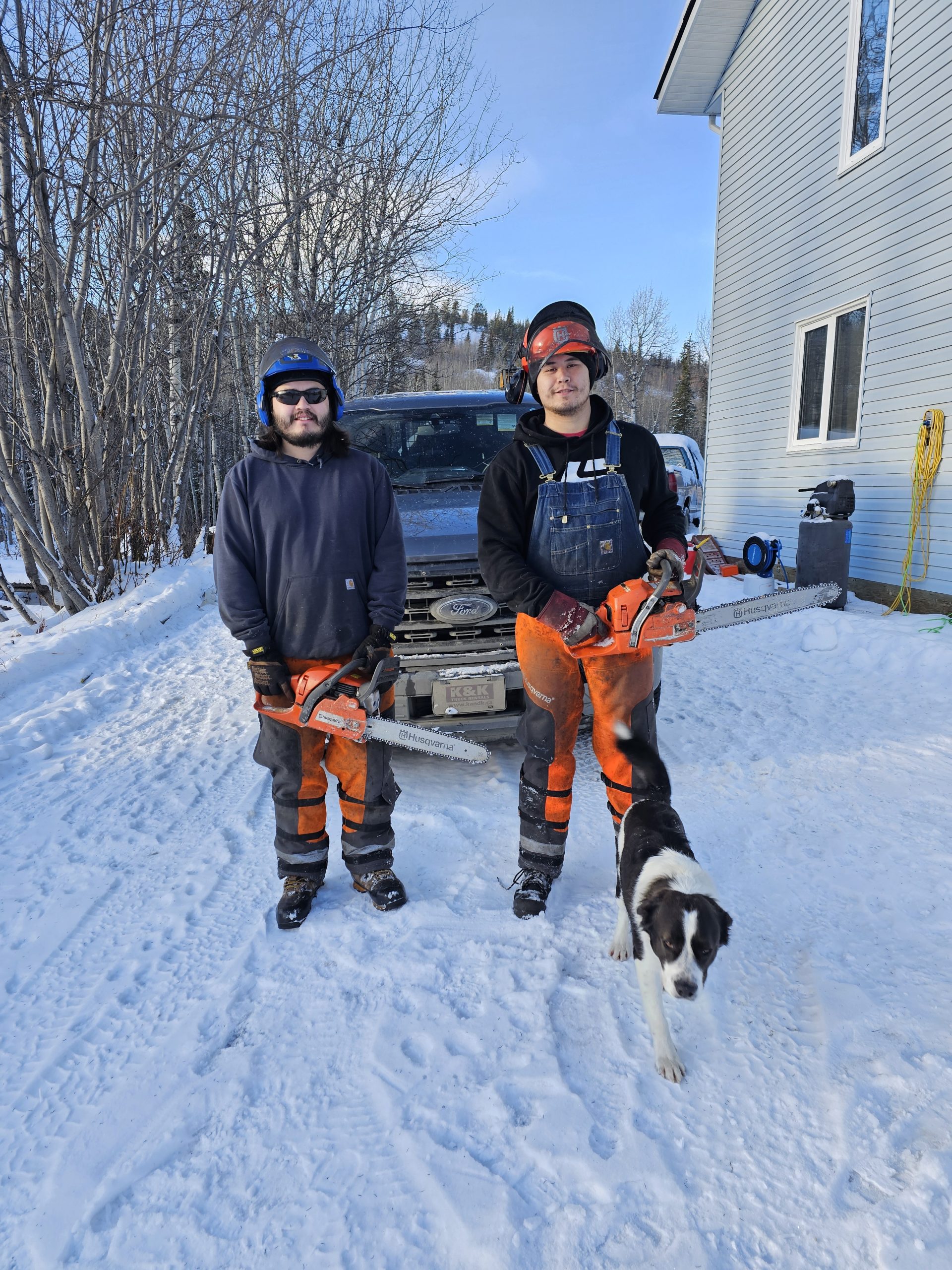
TKC Housing and Lands and Resources staff all completed FireSmart Steward training put on by the City of Whitehorse in September. TKC also welcomed their new FireSmart crew for 2024, Malachi Lavalee and Duran Simon. TKC’s GIS Analyst, Casey Cardinal, created a fire resiliency home assessment survey for Malachi and Duran to use to assist Citizens in helping to keep homes Firesmart.

Southern Lakes Caribou Relationship Plan needs your input!
While we have had many good conversations with Southern Lakes citizens, the Caribou Steering Committee have not really received much feedback about their draft Relationship Plan. In order to fill this gap, and in recognition of the continued interest by some parties to have additional time, the submission deadline for comments from Citizens has been extended until December 6. Please scan the QR code to submit your feedback about the ‘draft plan’:
Salmon in the Schools
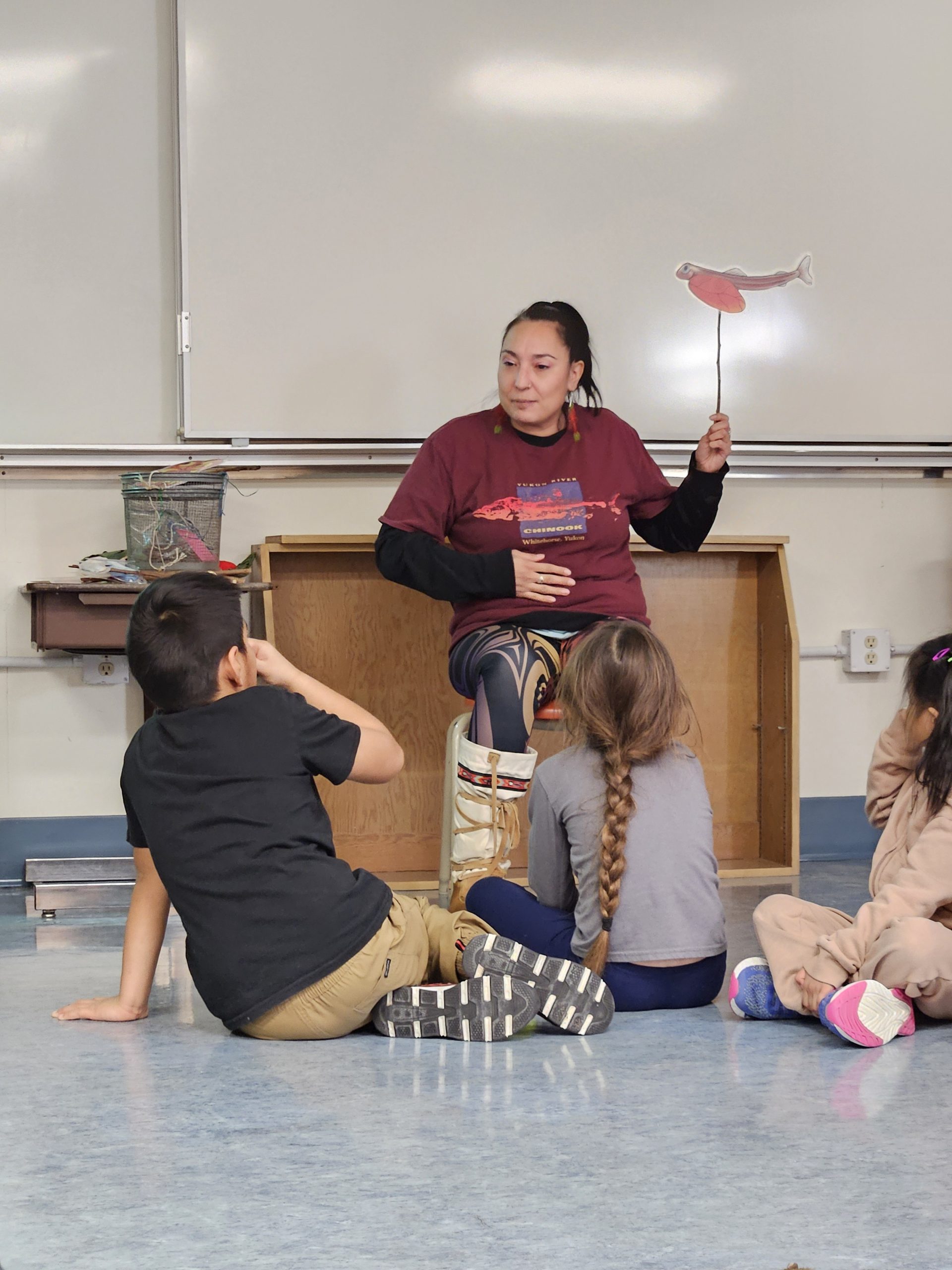
TKC’s Fish and Wildlife Coordinator, Kim Koyczan, and Natural Resources Coordinator, Kate Andre, joined the Salmon in the Schools program at Jack Hulland Elementary School to bring knowledge about TKC’s salmon stewardship projects, and why salmon are so important to Ta’an Kwäch’än.
Water Quality Monitoring Program
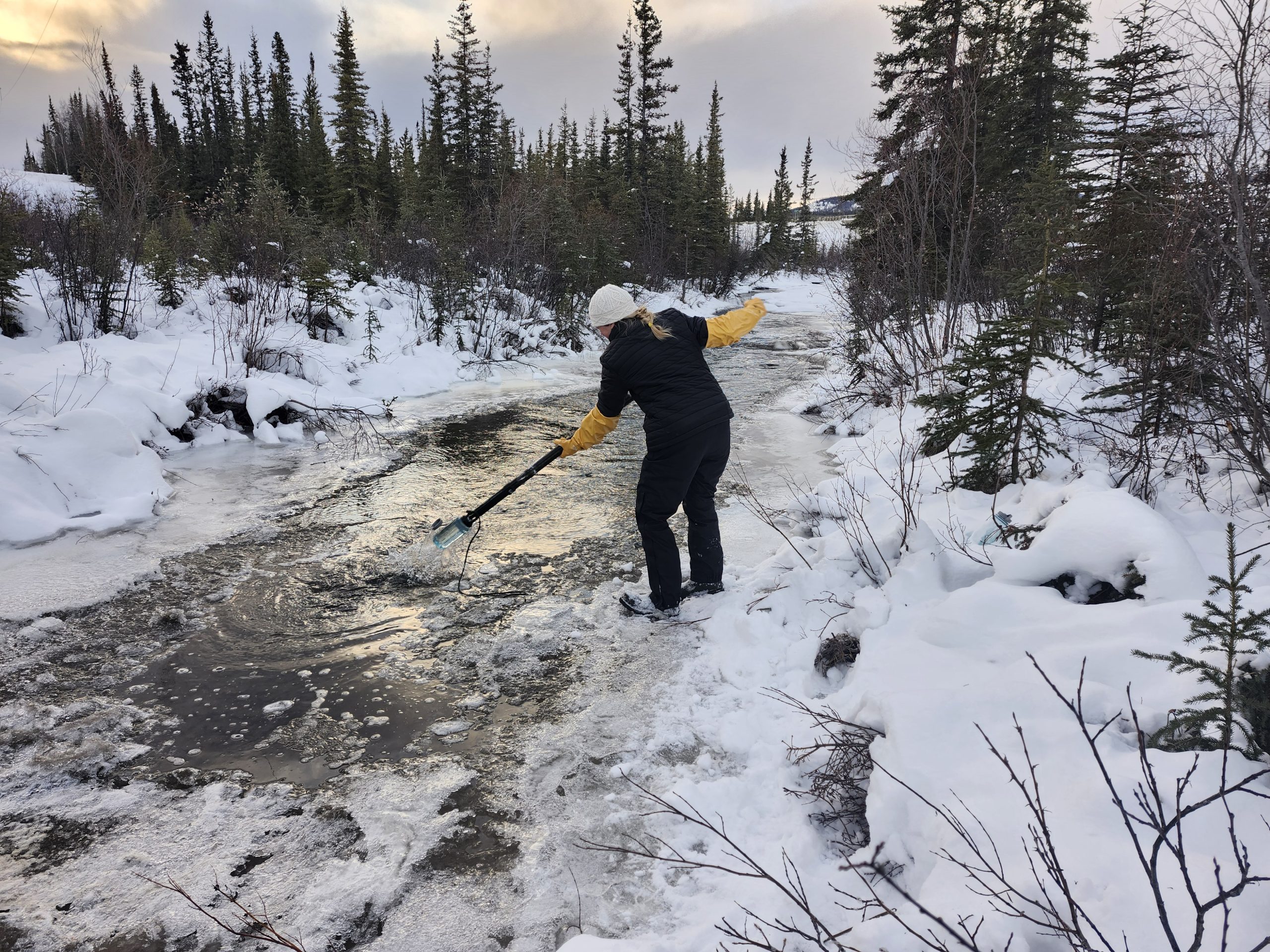
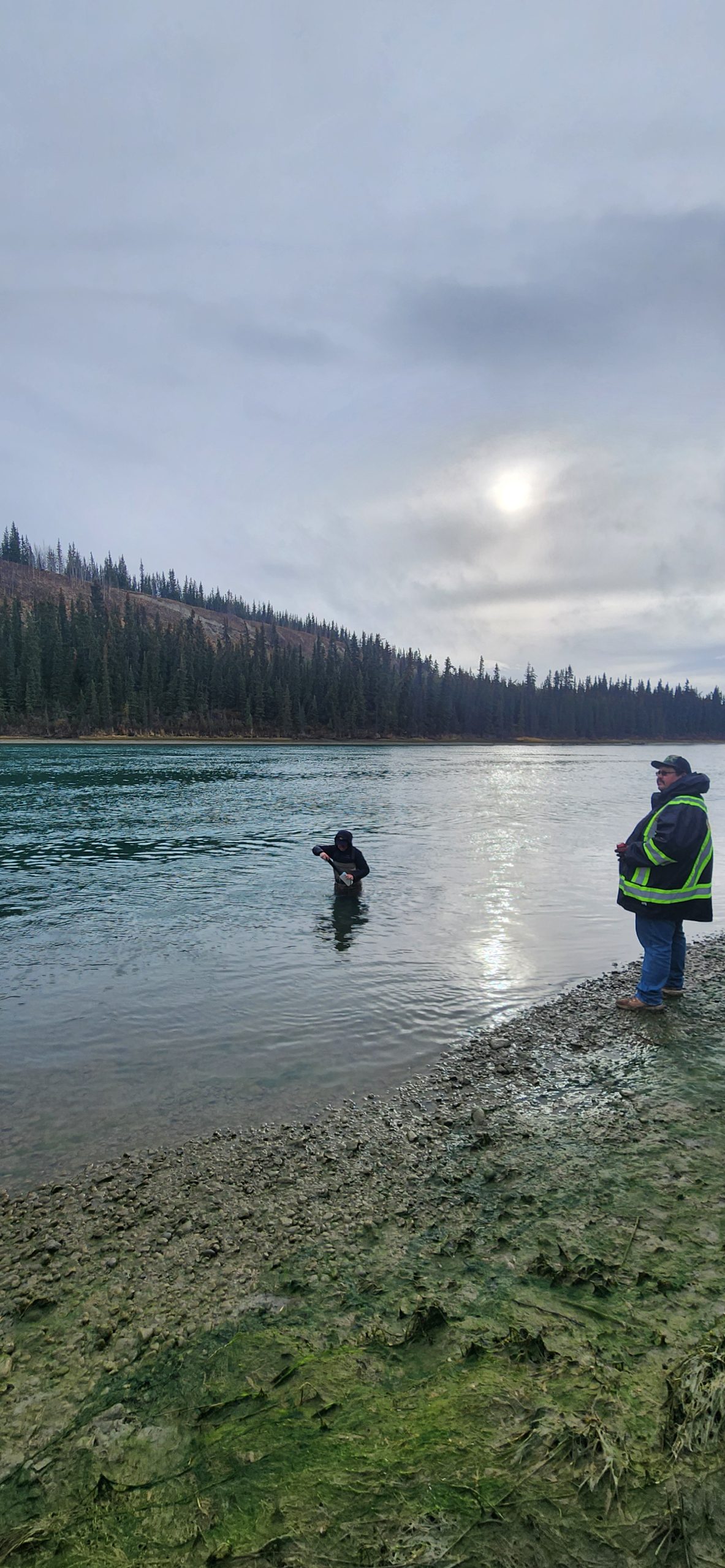
TKC Lands Monitors and Natural Resources Coordinator continue their water quality monitoring program supported by Yukon River Intertribal Watershed Council. A report summarizing water quality in the Traditional Territory is expected in the New Year.